Plug-in · wideband built in
The most affordable
Miata EFI.
$350, or $500 as a complete kit with the wideband sensor, its lead, the vacuum hose and a USB cable. A rusEFI engine computer that plugs into the stock harness, goes in the stock case (three openings to cut) and runs its own wideband. No other plug-in Miata ECU with a built-in wideband costs less.
- rusEFI
- STM32F405
- LSU 4.9 wideband
- 700 kPa MAP
- USB-C
- Stock case & plug

How it works
Two boards.
One brain.
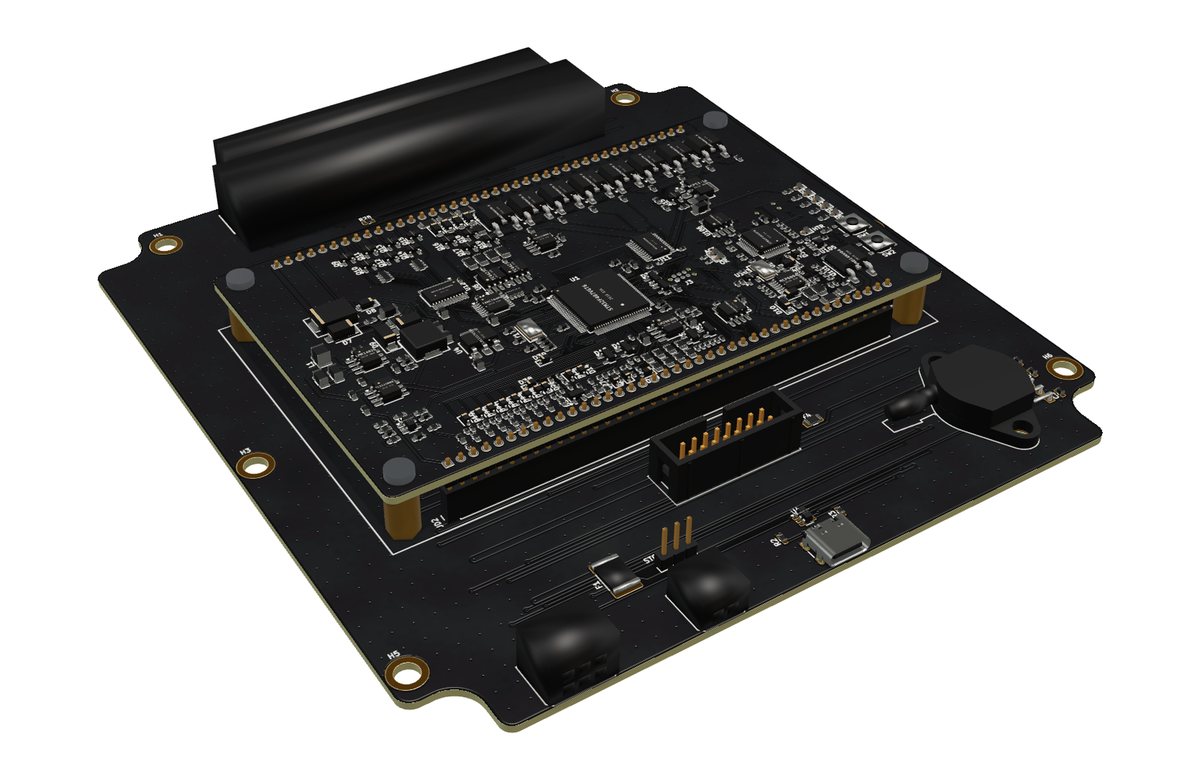
Every unit is two boards: one processor module, soldered flat onto a motherboard for your model year.
The brain
One daughterboard runs the engine on every year: an STM32F405 running rusEFI, 8 low-side drivers, 7 protected relay and lamp outputs, 4 ignition outputs and a built-in LSU 4.9 wideband controller.
The adapter
A motherboard for your model year fits the stock ECU case and takes the stock harness plug. It carries the MAP sensor, the wideband sensor plug, an add-on header and USB-C, and it reads the car's own sensors.
Same brain, every year
Every model year gets the same daughterboard, so a fix or a feature lands on all of them.
What's on the board
-
01
Plug in
Fits the stock ECU case and the stock harness plug. Add a wideband sensor and a vacuum hose.
-
02
Wideband built in
An on-board LSU 4.9 controller, the open-source rusEFI design. No separate controller or gauge box.
-
03
Boost ready
A 700 kPa absolute MAP sensor on the board reads vacuum through high boost.
-
04
Tune over USB-C
rusEFI firmware, tuned in TunerStudio, LibreTune or clibretune. Firmware updates over the same cable.
-
05
Protected outputs
Drivers with current limiting and thermal shutdown, and a separately protected sensor supply.
-
06
Open
rusEFI firmware is open source; the board designs are MIT-licensed.
Find your year
One motherboard per model year. The brain is the same on all of them.
| Years | Chassis | ECU connector | Status | Product |
|---|---|---|---|---|
| 1989–93 | NA · 1.6 | 48-pin, 2 plugs | Prototype | |
| 1994–95 | NA · 1.8 | 48-pin, 2 plugs | Prototype | |
| 1996–97 | NA · 1.8 OBD-II | 76-pin | Prototype | |
| 1999–00 | NB · 1.8 | 64-pin | Prototype | |
| 2001–05 | NB · 1.8 VVT | 72-pin, 3 rows | Prototype |
Shop
View all- Coming soon
 Coming soon
Plug-in ECU 1994–95
From $350.00 Coming soon
Plug-in ECU 1996–97
From $350.00 Coming soon
Plug-in ECU 1999–2000
From $350.00 Coming soon
Plug-in ECU 2001–05
From $350.00
Questions
Which cars does it fit?
The 1989–2005 Mazda MX-5 Miata, NA and NB, with one motherboard per model-year range (see Find your year). Cars swapped from automatic to manual are covered.
What else do I need?
A Bosch LSU 4.9 wideband sensor and its lead (the sensor screws into the stock front oxygen sensor's hole), a vacuum hose from the board's MAP sensor to the intake manifold, and your car's stock ECU case.
Do I need a laptop?
To tune, yes. The ECU talks to a laptop over USB-C, and the firmware has a base setup for each year. Tune it with TunerStudio, or with the open-source LibreTune or clibretune (clibretune also flashes the firmware, with a preset for these boards).
Is it street legal?
No. It replaces an emissions-certified engine computer, so it is sold for off-road and competition use only.
Is it open source?
The firmware is rusEFI, which is open source. The board designs are MIT-licensed.
When does it ship?
The first boards are being built and tested. Nothing is for sale until they pass on the bench and in a car: follow the project on GitHub for news.
Prototype
Follow the build.
The first boards are being built and tested; nothing is for sale yet. The designs, firmware and build notes are all open.